
Tsukemen vs. Ramen, Are They the Same? What Is the Difference?
Updated: Sep 21
If you have been researching Japanese cuisine ahead of an upcoming trip, you might have come across a dish called tsukemen. It often comes up in conversations about ramen, and the tsukemen vs ramen debate is one worth understanding before you visit. Is tsukemen actually ramen? Or is it something else entirely? If you have found yourself asking these questions, you have come to the right post. This is the definitive guide on Japanese tsukemen. Stick around until the end for some Tokyo restaurant recommendations!

Tsukemen vs. Ramen: What's the Difference?
Starting off with the most important question at hand, what is the difference really? While tsukemen and ramen share a lot of the same DNA — rich broths and wheat noodles — the difference lies entirely in the way that they are served.
With ramen, the noodles are left to soak inside the broth, absorbing all of its rich flavor. This is delicious at first, but anyone who has ever let their bowl sit for a little too long knows what can happen: soggy noodles. Not the most satisfying end to what started as a great dish.
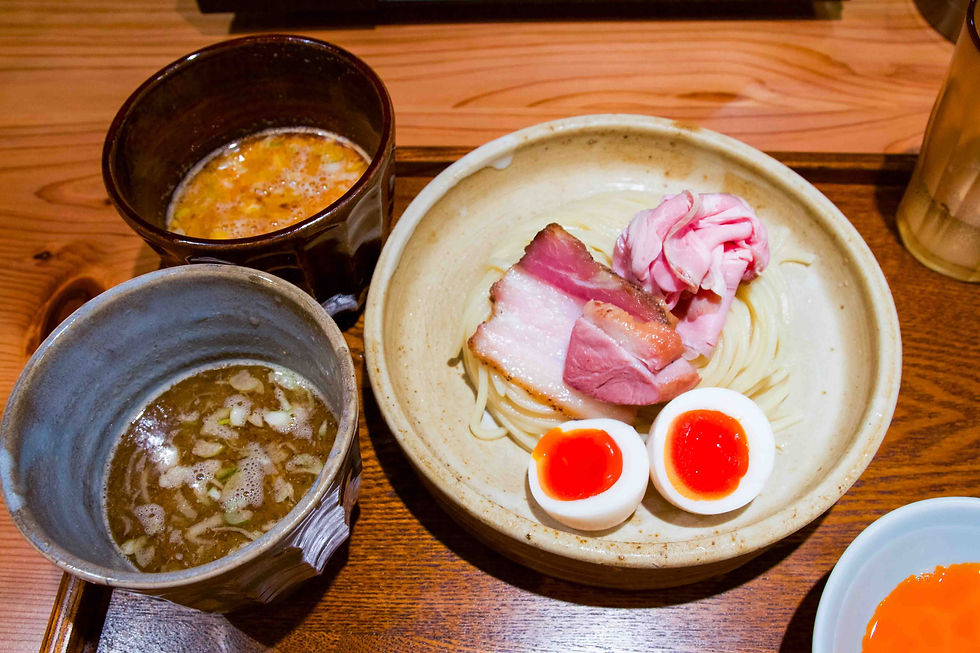
Tsukemen solves this problem entirely with a creative workaround. The noodles and broth are separated, and it is up to you to control how long you want them to soak before each bite. The result is a perfect noodle experience from beginning to end.

What Does “Tsukemen” Actually Mean?
In Japanese, つけ麺 (tsukemen) is a combination of two words: つける (tsukeru), meaning "to dip," and 麺 (men), meaning "noodle." Combining these two elements together is what results in the simple yet beautiful dish.
A Brief History Of Tsukemen
The invention of tsukemen is often credited to Kazuo Yamagishi, a restaurant owner in Tokyo, who began serving it more widely in 1961. The dish had quietly existed as a secret menu option for a few years before this, but Yamagishi was the first to see its potential as a menu mainstay, introducing it at the ramen shop Taishoken.

What Makes Tsukemen Noodles Different?
Because the noodles are the star of the show in tsukemen, they are served differently from your average bowl of ramen. Tsukemen noodles are often thicker and chewier, built to hold their texture while quickly absorbing the thick broth with each dip.
This is achieved by running the noodles through cold water after they are boiled, giving them that satisfying chewy texture. While they are most frequently served cold, there is usually the option to have your tsukemen noodles hot as well. Neither choice is wrong, and it really comes down to personal preference as well as the season. For example, if you are visiting Tokyo in July or August, cold noodles are a commonly sought-after refresher. However, in the depths of winter, hot noodles may be the better choice.

What About The Broth?
While it is true that noodles take center stage in tsukemen, the broth is not an afterthought. The most common varieties include pork-based (tonkotsu) and soy sauce-based (shoyu) broths, as well as spicy for those who like a bit of kick. Tsukemen broth is much more concentrated than a typical ramen broth — think of it less as a soup and more as a rich dipping sauce.
That said, many tsukemen restaurants offer a workaround for broth lovers. Ask for hot dashi or water, pour it into your remaining broth, and it transforms into a lighter, drinkable soup. This is one of those small rituals that make tsukemen dining feel truly special.

Bottom Line, Is Tsukemen Actually Ramen?
Yes, tsukemen is considered under the umbrella of ramen in Japan. It takes every element that makes ramen great — the rich broth, handmade noodles, and endless varieties — but reimagines the way in which it is served. Think of it as a more interactive ramen experience that also happens to solve some of the dish's biggest pain points, resulting in a truly unique dish.
If you love ramen, there is a near certain chance you will also love tsukemen too. And if you have ever felt disappointed by soggy noodles, then tsukemen might actually become your preferred order.

Recommendations
Tokyo is where tsukemen began, and the best city in the world to experience it. Here are a few popular spots worth visiting:
Fuunji - Shinjuku
Fuunji is a ramen shop with a unique origin story. Its owner, Miyake-san, comes from an Italian culinary background with no formal ramen training. Yet somehow, this perspective has created one of Shinjuku's most popular bowls (with both locals and tourists). Fuunji was instrumental in popularizing the intense, thick broth that is found in most modern tsukemen today.

Aidaya - Ueno
Aidaya sets itself apart by focusing on four high-quality broth options: Tonkotsu Gyokai, Garlic, Tantan, and Shrimp. Each brings its own distinct character to the tsukemen dining experience. If that alone is not enough of a reason to visit, they also serve wagyu beef cooked right in front of you, paired with raw egg on the side. It is no surprise that they are always busy.
Taishoken - Higashi-Ikebukuro
For anyone who wants to experience a bit of tsukemen history, Taishoken is the answer. Widely regarded as the birthplace of the dish, this historic ramen shop carries on the legacy of Yamagishi-san. Combined with its large portion sizes, it is an ideal place to stop for hungry travelers.

Kubota - Kyoto Tsukemen
Taking a trip to Kansai and craving some delicious tsukemen? Stop by Kubota for their rich miso broth, which mixes pork and fish flavor with a subtle spicy kick. The noodles are thick, complementing the broth perfectly.

In summary, whether you are a ramen veteran or just beginning to explore Japanese cuisine, tsukemen is a unique dish worth having. Give any of the spots above a try — order a bowl, dip your first batch of noodles into that thick, flavor-packed broth, and you will immediately understand why this dish always comes up in conversations about the best Japanese cuisine.
For travelers looking to experience Japan through its ramen, we host a variety of food tasting tours. Join us on our ramen tours in Ueno or Shinjuku, where you can sample 6 exclusive mini bowls across 12 different styles — including tsukemen.


Comments