
Best Ramen in Asakusa: 5 Top Shops Near Senso-ji
Updated: Sep 21
Looking for the best ramen in Asakusa? You're in the right neighborhood. Asakusa is one of Tokyo's oldest districts, home to Senso-ji Temple, Nakamise shopping street, and — fittingly — a ramen scene with deep roots. This is actually where Japan's very first ramen shop, Rairaiken, opened back in 1910 (it's no longer here, but its legacy shaped everything that followed in this part of the city).

Best Ramen in Asakusa
Today, the neighborhood's ramen shops range from old-school Japanese-style bowls to modern, award-winning broths. Here are 5 standout spots to check out between temple visits.
1. Noriaki Bibi (のりあき 美々)
Noriaki Bibi is Asakusa's go-to for serious miso ramen. The house seasoning blends four different types of aged miso from Niigata, which gets built into a soup made from slow-cooked pork and chicken bones. This is all finished with pork lard and pork back fat for extra richness.

Everything is stir-fried first, adding a smoky depth to every bite. Yuzu peel and fresh ginger on top cut through the richness just enough to keep you going bite after bite. There's a spicy miso option too if you want some heat with your richness.

Good for: Ramen lovers who want a heavier, more indulgent miso bowl than the norm. Just budget extra time — the shop is tiny and lines can run long, especially at lunch.
2. Yoroiya (与ろゐ屋)
A longstanding Asakusa institution, Yoroiya has been serving ramen with a distinctly Japanese-cuisine bent for decades. The broth leans on chicken and pork bones but gets extra depth from niboshi (dried sardines) and bonito flakes — classic Japanese pantry staples.
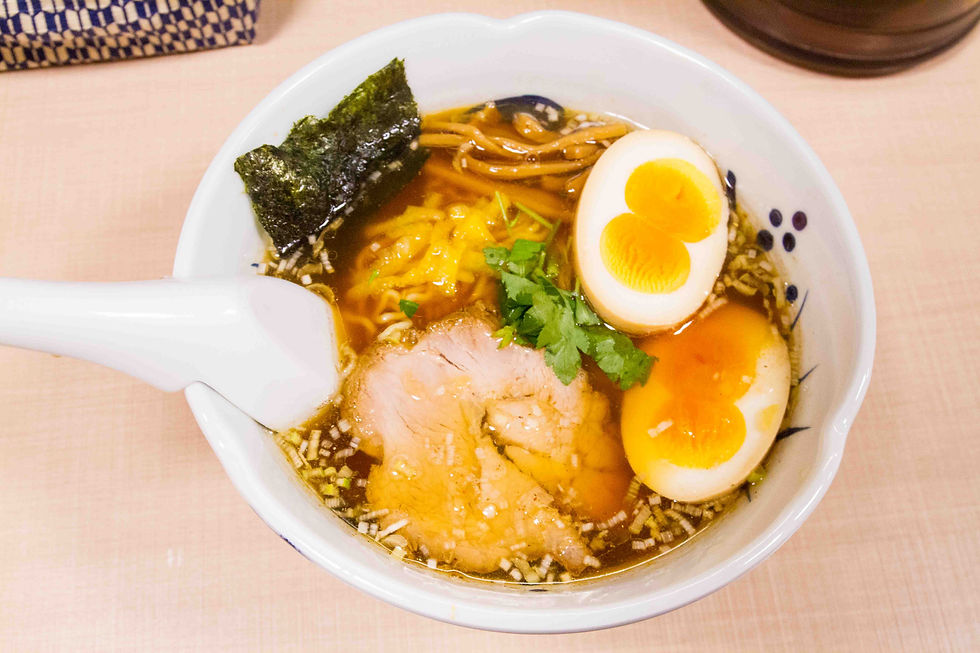
Their shoyu ramen is most popular and our favorite. But their ume shio (plum salt) ramen is a nice change of pace too: light, a little tangy, and easy to finish even on a full day of sightseeing.

Good for: Travelers who've had heavier tonkotsu bowls elsewhere and want something lighter and more traditional. The large gyoza on the side menu are popular for a reason. Also — order the double yolk eggs!
3. Ramen Kai (らーめん 改)
Clam-based shio ramen is uncommon in Tokyo, and Ramen Kai does it exceptionally well. The broth is built on a generous amount of clams, giving it a distinct briny, oceanic flavor that's noticeably different from the usual chicken or pork-based shio.

Thick, handmade noodles and toppings like bamboo shoots and wakame seaweed round out the bowl. Expect a line — this one's popular with locals, not just tourists. Note: Ramen Kai is technically closer to Kuramae Station (about a 15-minute walk from Senso-ji), so budget a little extra time to get there.

Good for: Ramen fans who've tried the standard styles and want something genuinely different.
4. Jikaseimen Uruchi "ULT" (自家製麺 うるち)
A minute's walk from Tawaramachi Station, Uruchi built its name on homemade noodles and a shoyu broth with real punch. Many travelers find Japanese shoyu ramen surprisingly light in flavor — Uruchi is the answer if you want something bolder and more assertive without straying from the classic style.
The thin, slippery handmade noodles are the shop's calling card, and they still top bowls with naruto (the swirled fish-paste slice), a traditional touch fewer and fewer shops bother with these days.

Good for: Travelers who tried a "classic" shoyu bowl elsewhere and found it too subtle — Uruchi delivers the same style with more intensity.
5. Aun Asakusa Branch (四川担担麺 阿吽 浅草)
For something completely different from the other bowls on this list, Aun Asakusa specializes in tantanmen — the Japanese take on Sichuan dan dan noodles.

Choose between white sesame (creamy and mellow) or black sesame (peppery and more intense), then dial in your own spice and numbing-pepper levels. It's a short walk from Tawaramachi Station, and with only a handful of counter seats, it stays intimate no matter how busy it gets.

Good for: Anyone who wants a spicy, sesame-forward break from traditional ramen broths without leaving the neighborhood.
Want More Ramen Recommendations?
This is just a taste of what Tokyo has to offer. Our Tokyo Ramen Guidebook covers 100 of the city's best ramen shops, with details on broth richness, noodle thickness, seating, wait times, and etiquette tips — everything you need to eat like a local.
Frequently Asked Questions
What is the best ramen shop in Asakusa? There's no single "best," since it depends on style preference — Noriaki Bibi is the standout for rich, indulgent miso ramen, while Ramen Kai is unmatched for its light clam-based broth.

Is Asakusa a good area to eat ramen in Tokyo?
Yes. Asakusa has a dense concentration of ramen shops within walking distance of Senso-ji Temple, ranging from classic Japanese-style bowls to modern, award-winning broths, making it easy to combine sightseeing with a great meal.
Where did ramen originate in Tokyo?
Japan's first ramen shop, Rairaiken, opened in Asakusa in 1910. It's no longer in the neighborhood today, but a reconstruction of its original menu and recipes can be found at a newly opened restaurant.

Do I need a reservation for ramen in Asakusa?
Most ramen shops in Asakusa, including those on this list, don't take reservations — it's typically first-come, first-served. Popular spots like Ramen Kai and Noriaki Bibi can have lines, especially around lunch.
What's the best way to try multiple ramen styles in Tokyo?
Since most shops only serve one or two bowls comfortably per visit, our Tokyo Ramen Guidebook is a great way to plan out several stops in advance — or join a guided tour if you'd rather skip the planning entirely.


Comments